This is part 4 of a series. Read part 3 here, or start with part 1.
If self‑awareness helps us recognize what is stirring within us, self‑regulation helps us decide what to do with what we feel. It is the interior freedom that allows emotion and reason to work together rather than against each other, and without it, emotions can lead us by impulse or habit. With it, they become information—signals that help us choose wisely and love well.
Many spiritual and relational struggles arise not because emotions are too strong, but because they move too quickly. A tense conversation, a harsh word, or an unexpected frustration can trigger a reaction before we are aware that we have a choice. Scripture names this vulnerability with striking clarity. St. James urges believers to slow the moment down: “You must understand this, my beloved: let everyone be quick to listen, slow to speak, slow to anger;for your anger does not produce God’s righteousness.” (James 1:19-20). This counsel is not a call to repression but to interior freedom—the kind of pause that creates space for prayer, wisdom, and charity to guide our response.
Pause Matters
The Catechism of the Catholic Church makes clear why this pause matters. Emotions, or passions, are part of how God created us, and we are called to emotional temperance. “…the alternative is clear: either man governs his passions and finds peace, or he lets himself be dominated by them and becomes unhappy.” (CCC 2339) Self‑regulation is precisely where that engagement happens. It allows us to notice emotion without surrendering to it, to feel deeply without being ruled by impulse.
Jesus Himself models this freedom. The Gospels portray Him as emotionally alive, moved with compassion for the crowds, grieved at Lazarus’s tomb, distressed in Gethsemane, and even filled with righteous anger in the Temple. Yet His emotions never determine His actions apart from love. Repeatedly, He pauses, withdraws to pray, and responds intentionally. His emotional life is fully human and fully ordered toward the Father’s will.
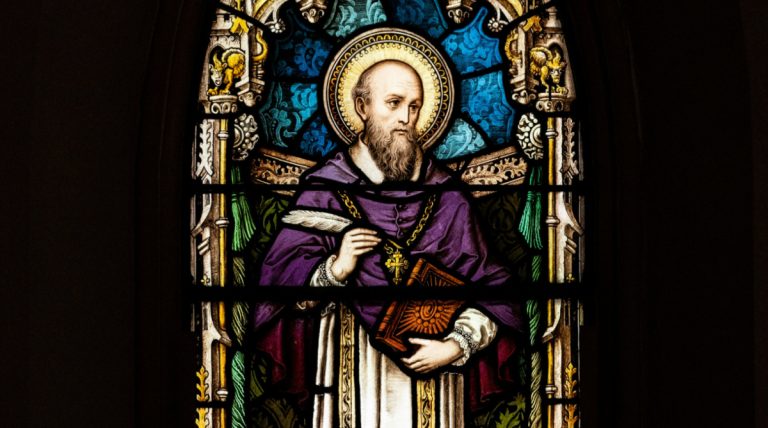
Saint Francis de Sales understood how central this steadiness is to the spiritual life. Writing to St. Jane Frances de Chantal, he advised: “Never be in a hurry; do everything quietly and in a calm spirit. Do not lose your inner peace for anything whatsoever—even if your whole world seems upset.” (Introduction to the Devout Life) His words assume that turmoil will come, but insist that holiness is formed in how we remain anchored in love when it does.
The Power of Restrained Response
The wisdom of Scripture echoes this insight in practical terms. The Book of Proverbs observes the power of restrained response in moments of conflict: “A mild answer turns back wrath, but a harsh word stirs up anger” (Proverbs 15:1). Self‑regulation does not mean avoiding difficult conversations; it means choosing a posture that seeks peace rather than escalation. Often, it is tone, timing, and presence—not argument—that determines whether a situation heals or hardens.
The early Church Fathers recognized that emotional order depends on rightly ordered love. Saint Augustine wrote in his Confessions, “My weight is my love; by it I am carried wherever I am carried.”. When our loves are distorted toward self‑protection, pride, or control, emotions tend to dominate us. When love is ordered toward God and neighbor, emotions begin to fall into harmony. Self‑regulation is one way we cooperate with this reordering of the heart.
Breathing Before Responding
In ordinary life, self‑regulation often looks small. It may mean breathing before responding to an email, choosing silence instead of sarcasm, or stepping away briefly so that we can return with clarity and compassion. This is easier said than done, but with God’s grace and an understanding of emotional intelligence, it becomes possible. These moments rarely feel heroic, but virtue is formed precisely here. As the Catechism teaches, prudence “disposes practical reason to discern our true good in every circumstance and to choose the right means of achieving it” (CCC 1806). Emotional intelligence supports this discernment by slowing us down enough to recognize what love requires.
Ultimately, self‑regulation is not about control for its own sake. It is about freedom—the freedom to respond from love rather than reflex, from truth rather than fear. As this freedom grows, our presence becomes steadier, our words more measured, and our relationships less reactive. Little by little, our emotional life comes into alignment with our deepest desire: to love as Christ loves.In this way, self‑regulation is not separate from discipleship but one of its quiet workshops.
Self-regulation is not separate from discipleship but one of its quiet workshops.
Each pause, each restrained word, each chosen response is an act of cooperation with grace. Through these small, faithful moments, God shapes our hearts, teaching us to respond rather than react and to become more like His Son.
_______________________________________________________________________________
Image of stained glass window of St. Francis de Sales courtesy of Unsplash.

