A Reflection from “The Power of Reparation” by Fr. Raoul Plus, S.J
In the revelations made to St. Margaret Mary, our Lord’s one object appears to have been to ask for reparatory sacrifices. Let us take a few examples from her life: On one occasion Jesus said to her: “Behold the Heart, which has so loved men and in return only receives ingratitude and contempt. That is why I ask thee to make reparation.”
The saint tells us: “The Sacred Heart wills that souls should make reparation by returning Him love for love, and that they should humbly implore pardon of God for all the insults that are offered to Him.”
Again, Jesus said to her: “My daughter, it is true that My Heart has sacrificed everything for men, without receiving from them any return. I feel this more acutely than the torments of My Passion. In spite of all My eagerness to do them good, they treat Me with coldness and contempt. Give Me the pleasure of making up for their ingratitude.”
In 1669 in the month of February, at the time of the Carnival, St. Margaret Mary wrote to the Rev. Mother de Saumise: “The loving Heart of Jesus seems to make me this request, namely, that I would stay with Him, close to His Cross in these days, during which all rush madly after pleasure, and that by the bitterness, which He will make me taste, I should, in some measure, compensate for the bitterness with which sinners immolate His Sacred Heart. He wishes me to grieve unceasingly with Him to prevent sinners from filling up the measure of their guilt.”
In order that reparation might be made by devout souls, our Lord asked for a special feast to be instituted in honor of His Sacred Heart, for the Communion of reparation on the first Friday of each month, and at other times for this same object; and for the practice of the holy hour. Most of Christ’s instructions to St. Margaret Mary tended to train her—and through her ourselves—in a spirit of reparation.
This is what He asked of her for the holy hour: “Every week from the Thursday night to the Friday morning, I will cause thee to share in the deadly sadness which I allowed to overwhelm My soul in the Garden of Olives. Thou wilt rise between eleven o’clock and midnight and remain prostrate flat upon the ground for one hour, that thou mayest satisfy the divine justice, by imploring mercy for sinners and likewise, in some measure, mitigate the sadness I felt when My apostles abandoned Me and could not watch even one hour with Me.”
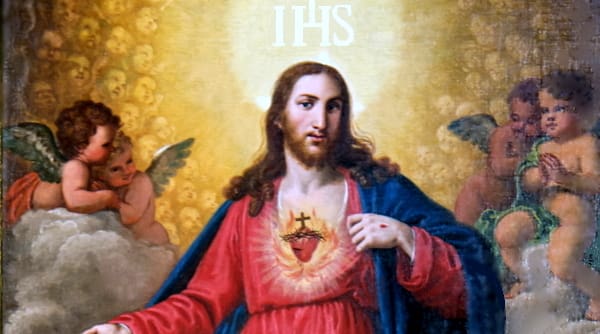
It is impossible to misunderstand our Lord’s meaning. The first time the Sacred Heart appeared to this saint, on December 27, 1673, He was seen upon the altar, the chosen place of sacrifice, with the face of one in pain. He asked her to draw a picture of His Sacred Heart, with the wound made by the lance, surrounded by a crown of thorns, and surmounted by a cross. Hence we can well understand the fiery utterances of St. Margaret Mary. She exclaims: “If only you knew how our Sovereign urges me to love Him with a love that will share His life of suffering! I know of nothing that is more fitted to ease the tiresomeness of our lives than patient endurance with love. Let us suffer lovingly without complaining and count as lost all moments passed without suffering.” The whole life of this saint is one hymn of reparation, of love that begets conformity to His suffering life. It is useless to give copious citations from her Life or works, they must be read through.
The Rev. Père Terrien, in his well-grounded book on Devotion to the Sacred Heart, says: “To make reparation is to love, but above all to suffer, to sacrifice self through love.”
“It is in the Heart of Jesus that we obtain the precious supplement of love, which alone can render our reparations really pleasing to Him.”
Jesus knocks at the door of our heart, asking us to make reparation, but our poor alms have no value unless they pass through His Heart. There is a blessed ebb and flow of the tide of love, it originates with Him and invites us, and our love must return to that center if we are to correspond effectually with His advances.
Art for this post on a reflection from The Power of Reparation: cover used with permission; Photo used in accordance with Fair Use practices.

